Why Inclusive Education Benefits Every Child | Srushti Montessori Bengaluru
Discover how inclusive education helps children build confidence, empathy, independence, and lifelong learning skills. Learn how Srushti Montessori's child-centred approach supports every child's unique journey.
4/21/20264 min read
Why Inclusive Education Benefits Every Child: The Montessori Approach
When parents begin looking for the right preschool, they often ask questions like:
Will my child be happy here?
Will they feel safe and supported?
Will they develop confidence and independence?
Will they be encouraged to learn in a way that suits them?
These questions all point to one important aspect of early childhood education — an inclusive learning environment.
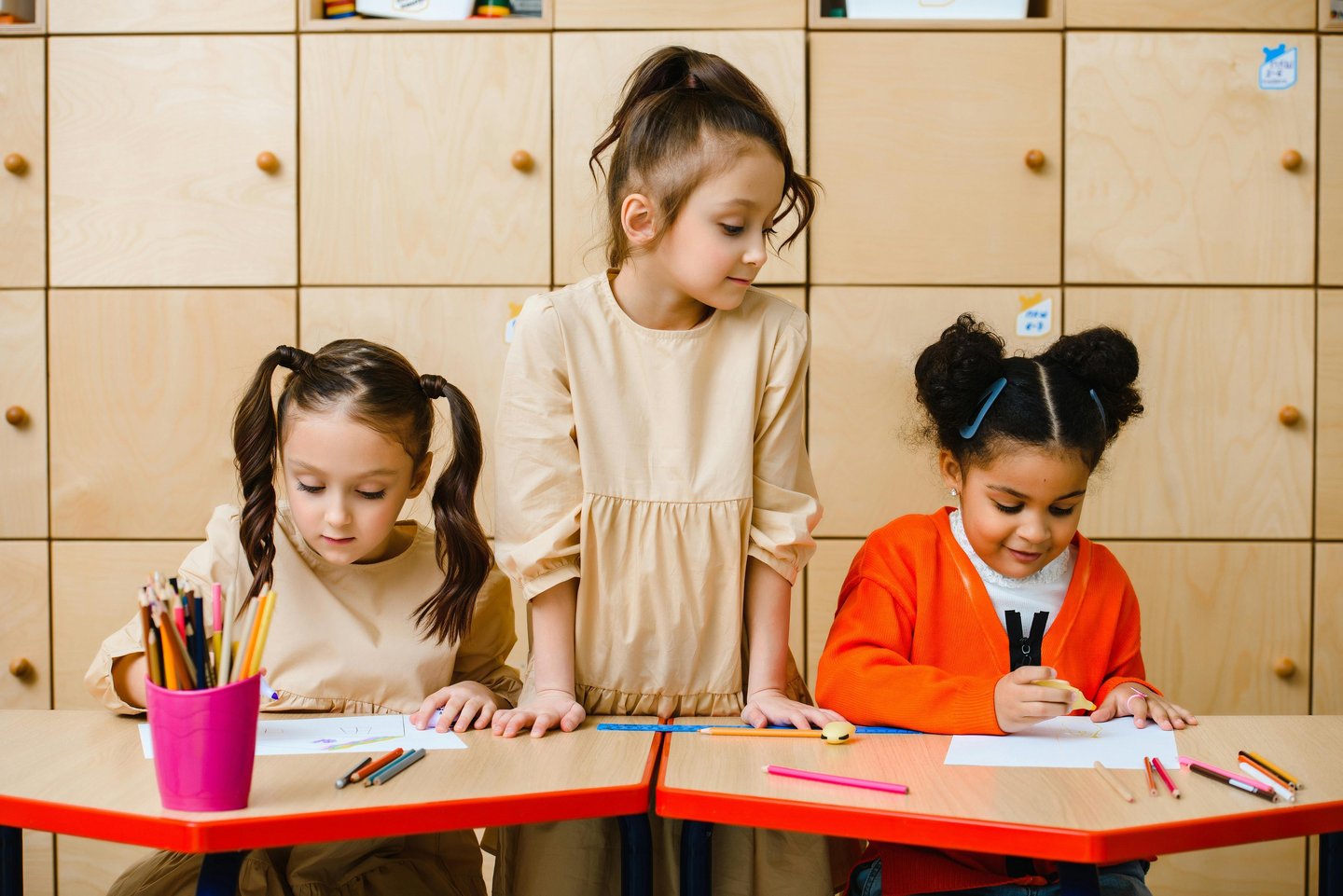
Inclusive education is about creating a school where every child feels respected, valued, and empowered to learn. It recognises that every child is unique, with their own strengths, interests, personality, and way of understanding the world.
At Srushti Montessori House of Children in Jayanagar, Bengaluru, inclusion is not just a teaching practice — it is the foundation of our learning community. Combined with the Montessori philosophy, it creates an environment where children learn with confidence, curiosity, and compassion.
What Is Inclusive Education?
Inclusive education is an approach that ensures every child has the opportunity to participate, learn, and thrive in a supportive environment.
Rather than expecting children to fit into a single way of learning, inclusive classrooms adapt to meet the needs of each child.
This means children are encouraged to:
Learn at their own pace
Explore their interests
Build meaningful relationships
Develop confidence through experience
Feel accepted and valued
An inclusive classroom celebrates individuality while fostering a strong sense of community, where every child belongs.
Why Montessori and Inclusion Work So Well Together
The Montessori philosophy, developed by Dr. Maria Montessori, is naturally aligned with the principles of inclusive education.
Montessori classrooms are designed around the belief that children learn best when they are given the freedom to explore, discover, and progress according to their own developmental readiness.
Instead of comparing children, Montessori educators observe each child closely and provide guidance that supports their individual growth.
This child-centred approach allows every learner to flourish while developing confidence, independence, and a genuine love for learning.
At Srushti Montessori, these principles are reflected in every classroom, creating an environment where children feel respected, supported, and inspired to achieve their potential.
👉 Learn more about our philosophy
How Inclusive Education Benefits Every Child
One of the biggest misconceptions about inclusive education is that it only benefits children who need additional support. In reality, an inclusive classroom enriches the learning experience for every child.
1. Children Learn Empathy and Respect
When children learn alongside peers with different strengths, personalities, and perspectives, they naturally develop empathy, patience, and respect. These experiences teach children to appreciate diversity, collaborate effectively, and build meaningful friendships — skills that are essential throughout life.
2. Every Child Learns at Their Own Pace
No two children develop in exactly the same way. Inclusive Montessori classrooms recognise this by allowing children to progress according to their individual readiness rather than a fixed timetable. Children are encouraged to master concepts with confidence, reducing unnecessary pressure and making learning a positive experience.
3. Confidence Grows Through Meaningful Experiences
Children become confident when they are trusted to make choices, solve problems, and experience success. Montessori environments provide opportunities for children to work independently, make decisions, and celebrate their own progress. This nurtures resilience, self-belief, and a willingness to embrace new challenges.
4. Collaboration Becomes a Natural Part of Learning
Learning is not a competition. Children collaborate, share ideas, and learn from one another in mixed-age classrooms that encourage leadership, cooperation, and mutual respect. These daily interactions strengthen communication skills, emotional intelligence, and teamwork.
5. Independence Prepares Children for Life
One of the greatest strengths of Montessori education is its focus on independence. Children are encouraged to:
Make choices
Care for their learning environment
Complete meaningful tasks
Solve problems
Take responsibility for their work
These experiences help children become capable, confident individuals who are prepared for future learning and life beyond the classroom.
👉 Related Reading: /blog/montessori-education-independent-learners
How Srushti Montessori Helps Every Child Become Their Best Self
At Srushti Montessori House of Children, we believe education should nurture the whole child — not just academically, but socially, emotionally, physically, and creatively. Our Montessori-based and experiential learning programs are thoughtfully designed to support every stage of a child's development.
Early Learners (2–3 Years)
Children begin their learning journey by developing:
Language and communication skills
Fine and gross motor coordination
Social confidence
Independence through practical life activities
Mont 2 & 3 (3–5 Years)
As children grow, they strengthen:
Early literacy and numeracy
Concentration and problem-solving
Creativity and self-expression
Positive relationships with peers
Mont 4 & Elementary (5–12 Years)
Older learners continue to build:
Critical thinking
Collaboration
Responsibility
Leadership
Real-world problem-solving skills
Throughout every stage, our educators observe, guide, and encourage each child according to their unique strengths and developmental needs.
Our goal is not to create identical learners — it is to help every child become the very best version of themselves.
Why Families Choose Srushti Montessori
Families across Jayanagar and South Bengaluru choose Srushti Montessori because they value an educational experience that goes beyond academics. They are looking for a school where their children can:
Feel safe and supported
Build confidence and independence
Learn through exploration and discovery
Develop empathy and respect for others
Grow into curious, compassionate, and capable individuals
By combining Montessori principles with an inclusive, child-centred approach, Srushti Montessori creates a learning community where every child is encouraged to thrive.
Frequently Asked Questions
What is inclusive education?
Inclusive education is an approach that ensures every child can learn, participate, and thrive in a supportive environment that values individual strengths and learning styles.
Does inclusive education benefit all children?
Yes. Inclusive classrooms help children develop empathy, confidence, communication skills, collaboration, and respect for diversity while supporting their individual learning journey.
Why is Montessori well suited to inclusive education?
Montessori education focuses on the individual child, allowing children to learn at their own pace through hands-on experiences and personalised guidance. This naturally supports inclusive learning.
Why should I choose an inclusive Montessori preschool?
An inclusive Montessori preschool helps children become confident, independent, and compassionate learners while creating a sense of belonging for every child.
Helping Every Child Thrive
The best education is one that recognises every child as an individual with unique strengths, interests, and potential.
At Srushti Montessori House of Children, we are committed to creating an environment where children feel valued, inspired, and empowered to learn. Through inclusive education, Montessori principles, and experiential learning, we help children build the confidence, curiosity, and resilience they need to succeed — not only in school, but throughout life.
Because when every child feels they belong, every child has the opportunity to thrive.
Where learning begins with joy.
Quick Links
Opening Hours:
Mon–Fri: 8:00 AM – 5:00 PM
Sat: 8:00 AM - 2:00 PM
Sun - Closed
213, 39th A Cross Rd, 7th Main Rd, 5th Block, Jayanagar, Bengaluru, Karnataka
© 2025 Srushti Montessori house of children . All rights reserved.
Our locations:
Montessori M1 , 2 , 3
Elementary
649, 38th Cross Rd, 14th Main Rd, 4th
Block, Jayanagar, Bengaluru, Karnataka 560041